Welcome to Toothcare Dental – We understand how much your smile matters. If you or your child have teeth that are twisted, overlapping or spaced unevenly, you’re not alone. Crooked teeth (the medical term is malocclusion) affect many people and can impact your confidence and oral health. On this page you’ll learn what crooked teeth are, why they occur, what problems they can cause and how we can help you straighten your smile.
Crooked teeth are misaligned teeth that may be rotated, crowded or too widely spaced. They often occur when teeth erupt at an angle or there isn’t enough room in the jaw. Dental professionals refer to crooked or crowded teeth as a type of malocclusion. Genetics is a common reason – you can inherit the size and shape of your jaw or teeth from your parents. Other factors include early loss of baby teeth due to decay or injury, long‑term thumb‑sucking or dummy use, tongue‑thrusting habits and mouth breathing. Trauma to the face or jaw can also cause teeth to shift out of position.

Inherited jaw or tooth size
If your teeth are larger than your jaw, there may not be enough space and they can overlap or twist. Conversely, small teeth can leave gaps.
Early loss of baby teeth
When baby teeth are lost prematurely due to decay or injury, neighbouring teeth can drift into the gap and block the path of adult teeth.
Habits in childhood
Prolonged thumb‑sucking, dummy use or tongue thrusting can put pressure on the front teeth and push them out of alignment.
Mouth breathing
Breathing through the mouth (often due to allergies or enlarged tonsils) can affect the way the jaw grows and lead to malocclusion.
Jaw injury or facial trauma
Accidents can damage the jawbone or teeth, causing them to move out of position.
Gum disease
Advanced gum disease can weaken the bone and cause teeth to drift or become loose.

Brush twice a day with fluoride toothpaste
Cleaning all surfaces removes plaque and reduces the risk of decay. Pay extra attention to crowded areas and consider using an electric toothbrush.
Clean between your teeth
Floss or use interdental brushes daily to remove food debris and plaque from tight spaces.
Limit sugary snacks and drinks
Sugar feeds the bacteria that cause cavities and gum disease.
Encourage good habits early
Discourage thumb‑sucking and pacifier use after the age of 2–3; encourage children to breathe through their nose and position their tongue against the palate.
Protect your teeth
If you play contact sports, wear a mouthguard to reduce the risk of injury.
See your dentist regularly
Routine check‑ups allow your dentist to monitor tooth development and detect crowding early.
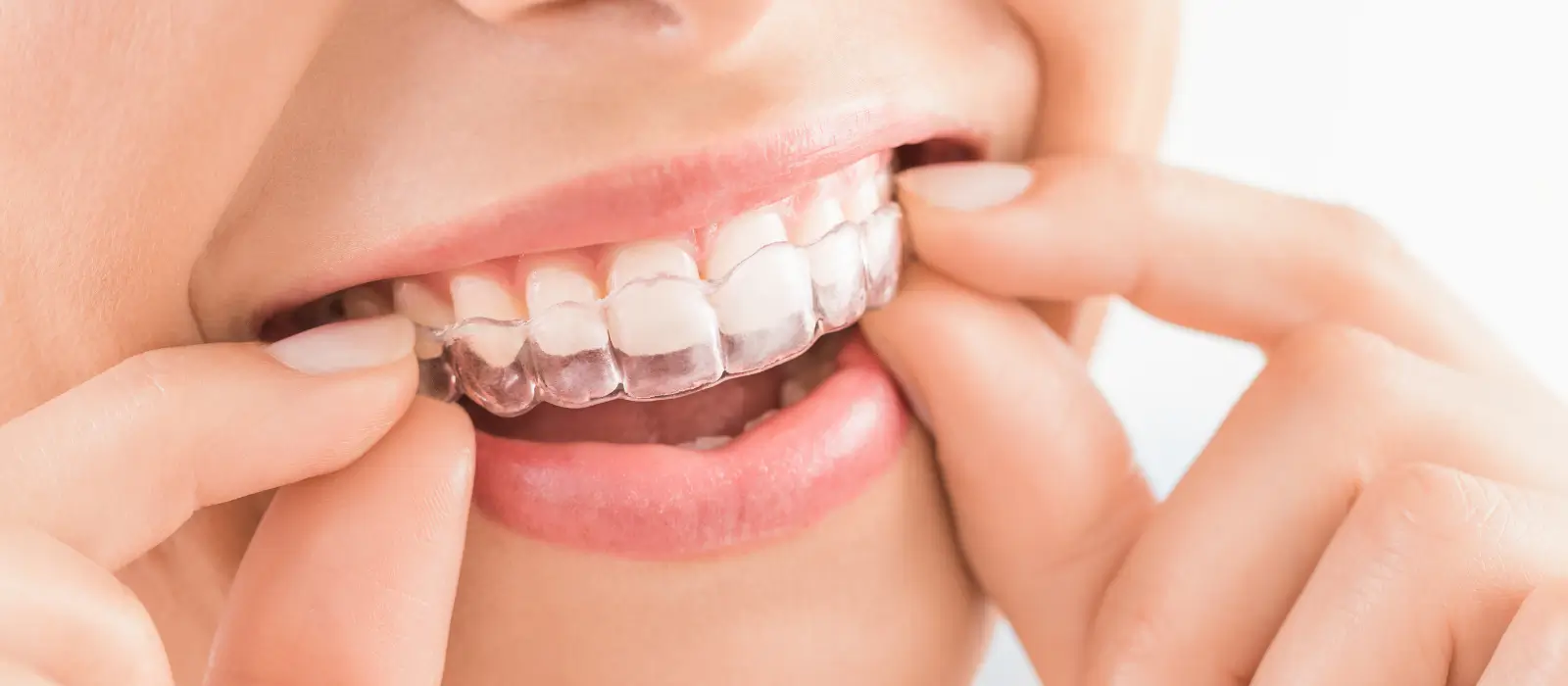
Removable, nearly invisible plastic aligners that gently shift teeth. You change to a new set of aligners every few weeks. Clear aligners are popular with adults and teens who want a discreet option and can be used for mild to moderate misalignment. Learn more about Invisalign treatment.
For minor misalignment, porcelain veneers, crowns or composite bonding can improve the appearance of crooked teeth without moving them.

Difficulty keeping teeth clean - overlapping teeth create hard‑to‑reach areas where plaque builds up, increasing the risk of tooth decay and gum disease.
Wear and jaw strain - an uneven bite can cause certain teeth to bear more pressure, leading to chipped or cracked teeth and strain on the jaw joints.
Chewing and digestion issues - misaligned teeth may make it hard to bite or chew, which can affect digestion.
Speech difficulties - severe crowding or jaw imbalance can affect pronunciation and speech clarity.
Self‑esteem - people with crooked teeth sometimes feel self‑conscious about their smile, which can impact confidence and social interactions.
While many people live happily with mildly crooked teeth, treatment can improve oral health and make cleaning easier. Orthodontic corrections can also enhance your appearance and reduce strain on your jaw.

Your child’s permanent teeth are coming through crooked or crowded. Orthodontic treatment often starts when most adult teeth have erupted (around age 12), but an early check‑up lets us spot potential problems sooner.
You have difficulty biting, chewing or speaking because of misalignment.
You experience jaw pain, headaches or excessive wear on certain teeth.
You avoid smiling because of crowded or protruding teeth and would like to improve your confidence.
If you’re unsure whether crooked teeth need treatment, our dentists are always happy to offer honest, unbiased advice. Some mild crowding doesn’t require any treatment, especially if you maintain good oral hygiene and it doesn’t bother you.

If you’re struggling with this condition or want a professional assessment, contact our friendly team today. We’ll help you find the right solution.

Crooked teeth can be caused by genetics, thumb‑sucking, early loss of baby teeth, mouth breathing, trauma or gum disease. Often it’s a combination of factors.
Not always. Many people live with mildly crooked teeth without any problems. Treatment may be recommended if crooked teeth make it difficult to clean your teeth, cause jaw pain or headaches, affect chewing or speech, or you’re unhappy with the appearance of your smile.
Orthodontic treatment generally begins after most of the permanent teeth have erupted, usually around age 12. However, younger children with significant jaw problems may benefit from early intervention. Adults can have orthodontic treatment at any age if their teeth and gums are healthy.
The duration depends on how crowded or misaligned your teeth are and the type of appliance used. Fixed braces or clear aligners typically need to be worn for 6–30 months. After active treatment you’ll wear a retainer at night to maintain your results.
Yes. After your braces or aligners come off, you’ll need to wear a retainer at night for at least 12 months (and sometimes longer) to prevent your teeth from drifting back.
We value every patient’s experience and take pride in the trust they place in our care. Their feedback not only helps us improve but also reflects the quality of service we’re committed to delivering to every patient. Read what our patients have to say about their time at our practice in Wigmore, Gillingham, Kent.
Have any questions about the treatments and services we provide?
Please get in touch using the form below.